

As a 3rd year ScotGEM student, I had a placement at the Broadford Hospital on the Isle of Skye earlier this year. I was based on the Isle of Tiree for 3rd year and found the emergency medicine on the island really stimulating. Therefore, I asked if I could go on the two-week placement to Broadford in Skye (that students based in the greater Inverness area usually have), as I had heard it was one of the best places to experience a rural emergency department (ED) in Scotland.
Broadford is a small rural hospital with about 20 beds in the inpatient ward upstairs. There are normally only two doctors on, one for the ward and one for the emergency department. The emergency department can get very busy, with three major car accidents when I was on placement. Because of its remote location, the Broadford is one of the only places where the rural GPs (titled Emergency Practitioners, or EPs) are expected to be able to intubate and have to maintain airway skills.
A day of placement on Skye can be quite long – handover begins at 8am every morning and often things were so interesting I stayed in late to see how a new patient was managed. I split my days initially between the ward and the ED, but mainly stayed in the ED after the first couple of days, as that was where I got to clerk in new patients. There were always bloods to be taken upstairs if things were quiet in ED however! There were lots of interesting clinics that ran throughout the week, some run by visiting consultants. The best ones I attended included the respiratory clinic, which had a surprisingly high volume of pathology, such as pulmonary fibrosis. The minor surgery clinic is also excellent for getting to practice suturing.
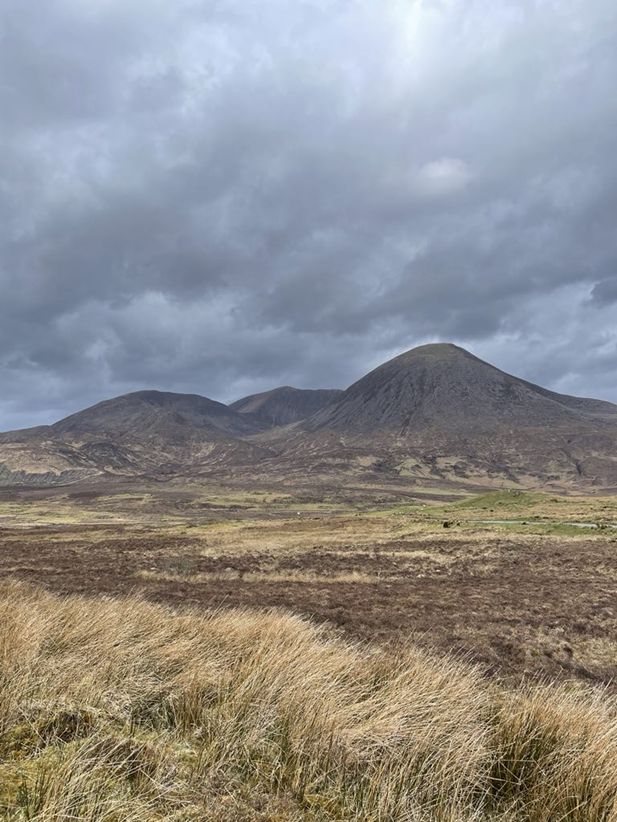
The hardest thing about the placement was the terrible weather. I went in February and it rained every single day. This was a shame as Broadford is in a beautiful setting, in a bay with lots of lovely hikes and walks nearby. I have enclosed some pictures taken in the brief intervals between rainstorms.

While I was on placement at Broadford Hospital, I was lucky enough to be involved in some very interesting cases. The first of these involved an acutely unwell patient presenting with shortness of breath. The management of this patient was great to witness as it drew upon my learning from the Patient Journey Urgent Care (PJUC) block, including the BASICS course, completed in second year.
Another important learning point came from an elderly man who came in after losing consciousness. His medical history included a similar event, so it would have been easy to attribute this event to the same cause, and initially I thought this was the most likely outcome. Instead, the patient was transferred for further investigations, which revealed an entirely different cause. This case taught me a lot about the importance of a good collateral history, and not to assume a benign cause.
Joshua is a current Year 4 student based in Tayside